Saturday, March 13, 2021

Week of March 8, 2021

 This week was filled with beautiful weather, muddy boots, soggy snow gear, and lots of learning! With temperatures reaching above 40 degrees almost every day, it was easy to get back into our normal routine of being outside more often. By Thursday, we were able to spend the entire day outside. It was wonderful!

This week we had a special performance from one of our reading groups. This group has been working with Mrs. Mock for a few weeks on the Velvetine Rabbitt reader's theater. Through reader's theater, students get a chance to focus intently on their intonation when reading, as well as the use of dialogue within a text. On Friday this group was able to present their play to the rest of the class. I was very impressed by this group as well as all of our audience members who made our classroom a safe space where others felt comfortable taking this academic risk. 

While outside on Thursday, students were able to write new forest poetry. This is something we haven't done since the fall but no one seemed rusty in their poetic skills. Their pieces were absolutely magical and the inspiration for our Writer's Celebration on Tuesday. Hopefully, many of you will be able to join us for their readings. If you need the Google Meet link, please contact me directly. 

In math, we began our next unit, learning fractions. At the beginning of the week, we focused on the importance of fractions being equal (fair) pieces. Everyone understood the importance of sharing a cookie, sandwich, or their favorite candy bar equally! Next, we built fractions using polygon pieces. Students took time to build and compare unit fractions based on their size. Finally, we built a fraction number line between the trees in our classroom, comparing several fractions across the same line. This allowed students to identify equivalent fractions as well. 

Here are some activities to spark conversation around fractions:

Make a grilled cheese sandwich, ask your child if they want their sandwich in halves or fourth? Have them explain which way will give you more/less pieces and how do they know.

Pull various measuring cups out. Have your child place the measuring cups in order from smallest to biggest. Ask them to read the fractions on each cup. 

Measuring cup extension-Have your child predict how many "scoops" it would take for each measuring cup to equal 1 cup. Then, allow your child to test of their prediction. Have a strong conversation around how important the denominator (bottom number) is, and how it tells you how many scoops you would need to make 1 whole cup. They could even pour their scoops into the 1 cup measuring cup to see for themselves. 

Ask them questions such as: 

Which is longer: half of a show or half of a movie? explain why

Which is heavier: 1 pound of flour or 1 ounce of sugar? explain why

Here are some pictures from the week:

Learning our new poem for March


Swinging in the sun


Learning about fractions


Lunch in the sun

The sap was flowing this week!

Forest poetry at its best


Our fraction number line

Reader's theater 

Mud season has begun

Making trenches to move the water out of our learning space

Reaching new heights every day!

On a personal note, as an educator, I was able to receive my J&J COVID vaccine on Saturday! This certainly put a smile on my face.


Sunday, March 7, 2021

Week of March 1, 2021

 This week we focused our attention on wrapping up our math unit as well as completing our informational writing pieces. In math, students have been focusing on multi-digit addition and subtraction strategies, word problems, and rounding to gather estimated sums. Starting next week, we will move into our Fraction and Time unit. 

In writing, students learned the ABCs of writing a strong introduction paragraph. In connection to our science unit, students are writing an informational piece about how a watery cave near the Gulf of Mexico has changed over time based on the fossils found inside the cave. The first part of a strong introduction is, A: attention getting/creating a hook. Students learned about the various ways to gain a reader's attention. In our reading groups, we identified hooks used by authors as well. Next, we have part B: Background information. Using information gained, students were able to use their background knowledge about the watery cave to build understanding for their audience. Lastly, C: Claim/Stating your thesis.  A thesis statement states what you believe and what you intend to prove. Students learned the important role of having a thesis statement.

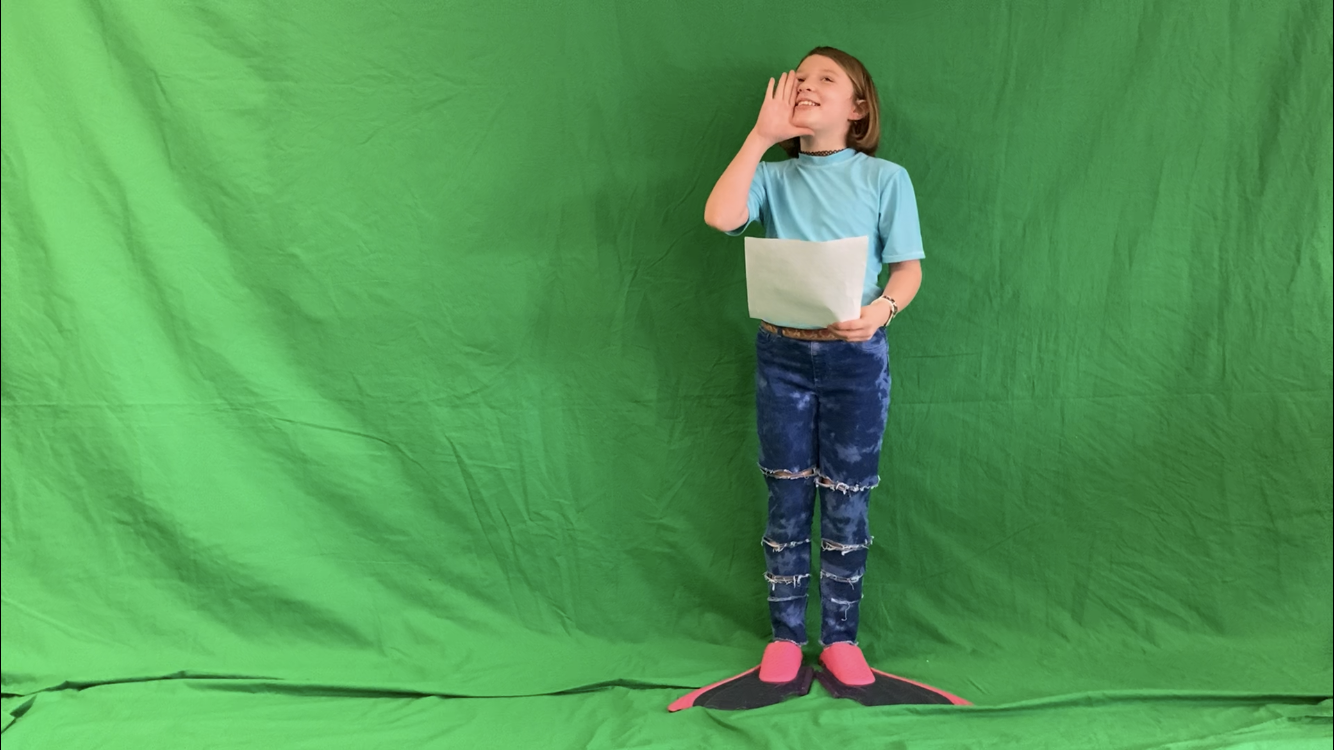
In recent years, Hartford has added an "enhancement" piece to our writing standards. In third grade, students are asked to provide formatting, illustration, or visual enhancements to increase their understanding of their writing topics. For this informational writing piece, students were able to choose from three options to meet this standard. They could format their writing to include images from the cave, create a book and add illustrations to each page of their book, or they could read their writing aloud, in front of a green screen, and then be placed in front of the cave images, creating a video of their informational piece. I was pleased with the variety of choices students' chose. The options were chosen pretty equally across the students. I am still working with Mrs. Johnson to figure out the best way to share these writing pieces with you. Each student has so much to be proud of!

In the forest this week, it could have been a little warmer. Most of the week, our buckets were frozen and little sap was collected. We still held math groups outside three days this week, as well as lunch and exploration time every day. Looking ahead, the temperatures this week should be wonderful for sugaring! It is possible by Wednesday we might spend another day completely outside. I will certainly email you later on if that is the case. 

Here are some questions to spark conversation:

-What enhancement did you choose for your writing piece: formatting, book, greenscreen? Why did you choose this option?

-If a mosquito fossil was found, what does that tell you about the climate of that land long ago?

-Why is it important to use rounding and estimation when solving difficult addition or subtraction strategies?

-What does the forest classroom look like? How has that changed throughout the seasons?

Pictures from the week:

Invisible students 

Time for math outside


We are so fortunate to have Mrs. Mock work with us for 2 hours every day!

More math groups

Green screen creations

It all starts with this!


Sunday, February 28, 2021

Week of February 22, 2021

 We had a wonderful week back from February Vacation! It was wonderful to see everyone and dive back into learning. 

With the completion of our last science unit, this week we have been working on creating informational writing pieces based on the knowledge we have learned about how things change over time. Students are using artifacts found within a watery cave as evidence to support their claim. We hope to have these writing pieces completed within another week or so. In years past, I have hosted Writer's Celebrations. These celebrations were a time for families to come in and listen to their children share their writing pieces with an audience. I'm thinking we can host something similar to this, virtually. Be on the lookout for more information regarding this event in the upcoming week. 

We returned to our reading and math groups throughout the week. In our reading groups, we continue to focus on character motivation (why is the character acting the way they do?), dialogue (making sure our reading voice matches the feeling of the text), and the author's craft (reading the text the way the author intended us to read it and determining what the message of the book might be). In math, we continue to strengthen our multi-digit addition and subtraction skills. Soon, we will be moving onto our next unit, Introduction to Fractions. Anytime you have a moment in the kitchen, encourage your kiddo to take note of the various measuring cups you have in your drawers. Discuss observations they have about the different sizes and shapes of the measuring tools. Anything hands-on will only deeper their understanding of fractions when we begin our next unit. 

This week the weather was certainly on our side. We had temperatures reaching 40 degrees on Wednesday. Besides Class Council. students were able to spend the entire day learning outside. It was wonderful to reduce the number of transitions to and from the building and spend more time in the sunshine. On Friday, we had the opportunity to tap our beloved maple trees again and began the sugaring process! It was around this time last year that we shut down, and couldn't see the whole tap-to-table process, but I am keeping my fingers this year we will all be able to see our hard work pay off. 

Here are some questions to spark conversation:

-What happened with the mice on Wednesday?

-What artifacts are you writing about in your information piece? 

-What time of year can we tap maple trees?

-What did you think was impossible before the school year began? How has that changed over time?


Here are some pictures from the week:

Building an ice ship


Beautiful temperatures midweek!


Finding bucket ice first thing each morning

Perfect way to start our day together

Mi Maestra (our Spanish teacher) joined us in the woods this week as well

In celebration of the 100th day, every student built a snowman!

Adding lids to our maple buckets! Best way to end the week!


Sunday, February 14, 2021

Week of February 8th, 2021

 This week we were completely immersed in science! It was a great change for us all and allowed us to think deeply about the animals and environment around us and how much has changed over time. When looking in your child's Friday Folder, be sure to take a closer look at all of the investigations we completed. There is an accompanying paper that provides families with prompts you can use to start science conversations with your kiddo. They should be able to answer each question listed with evidence and knowledge from our investigations. 

At the beginning of the week, we focused on fossils and how they provide clues to what the habitats were a long time ago as well as what animals could have lived there. Next, we looked at animals today and how humans have created different breeds within the same species. We discussed the importance of selection (choose a trait to reproduce over a long period of time) and how selection can happen with or without human involvement. We finished the week looking at mosquitoes and their life cycle. By looking closing at one organism, students recognized when an environment changes (such as more rain one season followed by hot weather) the organisms within that environment also change in order to survive. When we return we will look at how our environment can change our physical traits. 

I hope everyone has a wonderful February vacation this week. Stay safe, get outside, enjoy some much-needed downtime, and don't forget to continue reading! 

Here are some pictures from the week as well as questions to spark conversation:

Looking at similarities among different fossils to predict what habitat these animals live in

The sun was a wonderful sight this week

Building snow towers

We were able to have PE in the gym for the first time this school year!

Trudging through the newly-fallen snow


Playing "500" in the deep snow

Soccer has become an important part of our afternoons together

Even when it's 5 degrees, we find ways to get outside and move around


Science questions to spark conversation (these are the same as the ones that came home Friday):

Fossil Dig:

  • What are fossils?

  • What can fossils tell us about the world?

  • How have landforms changed over time?

  • What is a habitat? What is a trait?


Watery Cave & See-Think-Wonder Chart:

  • Tell me about what was found in the watery cave.

  • How did those things get in the cave?

  • Has there always been water in the cave? How can you know for sure?

  • What kind of skull was it? How do you know it was not a reptile’s skull? How can this skull tell you what kind of food it ate?

  • After completing some science mysteries, how did your observations of the cave findings change?


What Do These Familiar Animals Eat:

  • What is an herbivore? Carnivore? Omnivore?

  • How can you tell what type of food the animal eats?

  • How do you know if it is a mammal or reptile skull?


Designer Dogs:

  • What is selection? Why do humans use selection?

  • Where did the first dogs originate?

  • What is a species? What is a breed?

  • If you could design your own animal, what two species would you use?


Adopt a Lizard:

  • Why are sticky toe scales important to green anoles?

  • How many sticky toe scales did you have? Did you survive in the invasion of brown anoles?

  • Can selection happen without humans? How?


Sunday, February 7, 2021

Week of February 1, 2021

 This week was filled with snow, reading, snow, math, snow, writing, and more snow ❄. We discovered new kinds of snow formations along the brook (see pictures below) and students had to trudge through the newly fallen snow on Wednesday morning after our snow day on Tuesday. We held reading groups inside this week and continued to host math groups outside for much of the week. I had the pleasure of reading with each student individually this week and I could not be prouder of the progress our group is making in reading. Every student is moving forward with their reading progress! I sure hope they are showing you some of those skills when at home. (Remember, third graders should be reading 20-30 minutes each night). 

This week we continued our investigation of Hartford's history. We took a closer look at the early European settlers and what contributions they made to our town. We ended the week organizing Hartford facts in chronological order, gaining a new familiarity with historical timelines. Students also made the connection to the importance of having a written language because Abenaki people did not have a written language, and therefore we still do not know as much about their history as we would like to. 

Looking ahead, this week coming up we will be spending a little more time inside to complete our next science unit. Students should plan to start their day inside all week. Don't worry, this will not become our norm 😉. We will be investigating animals through time and how their bodies have adapted in order to survive. The homework this week will be connected to our science unit. 

Lastly, tomorrow night I will be hosting a Virtual Math Night for any family members who wish to gain a stronger understanding of the 3rd-grade math curriculum, key learning targets, and strategies to support your child at home. This discussion will be adult-focused. Students do not need to attend. 

Questions to spark conversation:

Why do we have more information about the European settlers than the Abenaki? What information do you feel would be important to keep a record of?

What discoveries did you make in the woods this week?

Can you read to me for a few minutes? (listen and praise your child for how they sound, unknown words they solve, and the effort they put forth)

Tell me about the Train Wreck of 1887

Pictures from the week:

Enjoying lunch under the trees


After snowy days and windy nights, these formations appeared.
                                          

                                                            Snow cones for sale! Any takers?

Chopping up the snow

When searching for firewood, one student came across this intricate pattern inside the bark.

Placing historical dates in order

Our walking path has become a side slide

Trying out a new hill for snack recess